Unifying Intelligence: How MCP Servers Empower AI Agent Integration

Introduction - The Rise of Autonomous Agents
Artificial Intelligence is no longer confined to single-purpose models. Today, we have a new wave of autonomous agents, systems capable of reasoning, planning, and executing complex tasks independently. From research assistants to code generators, these agents are becoming the building blocks of next-generation software ecosystems.
However, as the number of agents grows, so does the fragmentation problem. Each operates in isolation, using its own APIs, data structures, and memory systems. The challenge lies in unifying these agents into a cohesive ecosystem where they can collaborate seamlessly.
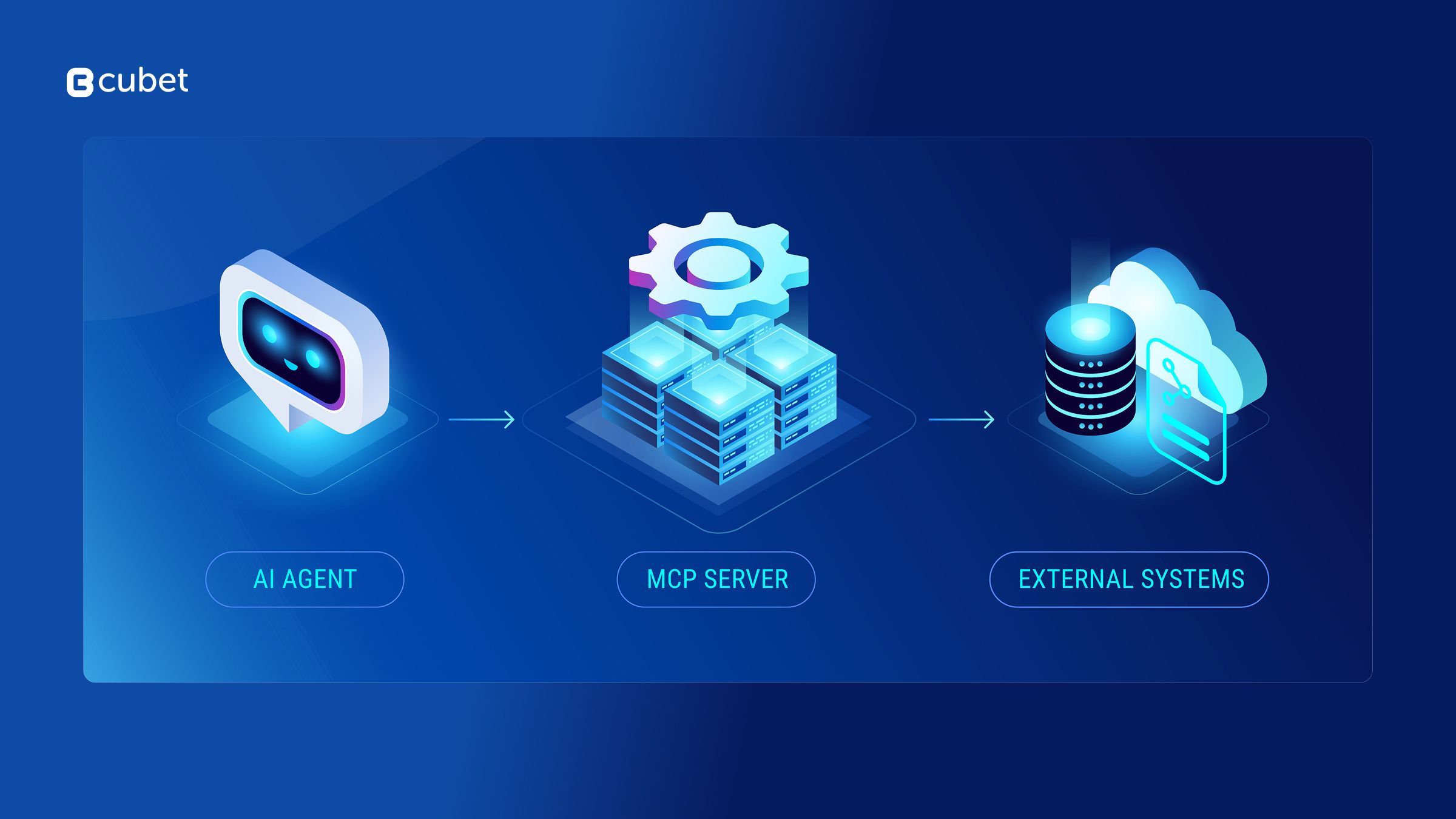
This is where MCP (Model Control Protocol) servers come in. Acting as the integration backbone for agent ecosystems, MCP servers provide a unified communication and control layer, enabling multiple AI agents to think, act, and learn together.

The Challenge of Multi-Agent Systems
Imagine you have one agent that writes code, another that reviews pull requests, and a third that manages deployments. Each works well individually, but when you need them to cooperate, chaos ensues.
Common challenges include: -
- Lack of shared context: Agents operate on fragmented states with no memory of each other’s actions.
- Incompatible interfaces: Different frameworks use inconsistent protocols or APIs.
- Redundant effort: Multiple agents repeating similar tasks due to poor coordination.
- Limited orchestration: No central authority to delegate, monitor, or verify task execution.
This fragmentation leads to inefficiency and missed potential. To truly achieve collective intelligence, agents need a unifying infrastructure, a common ground for communication, memory, and coordination.
The Integration Backbone
MCP (Model Control Protocol) servers are designed to solve precisely this problem.
An MCP server acts as a hub, connecting multiple agents, APIs, databases, and environments through a standardized protocol. Instead of having each agent communicate directly with one another, they all connect through the MCP layer, which manages context sharing, task routing, and security.
Think of MCP as the message bus and command center of your AI ecosystem. It ensures that every instruction, query, or memory access is handled in a consistent and interpretable way across different agents.
Core Capabilities of MCP Servers
1. Unified Command Execution
MCP servers standardize how commands are sent and executed. Agents don’t need to know the inner workings of each other; they simply send tasks through the MCP interface, which handles routing and permissions.
2. Shared Memory and Context
One of the most powerful features of MCP is its context persistence. Agents can access a shared knowledge base, memory embeddings, or even real-time task states, ensuring that insights from one agent inform the decisions of another.
3. Task Decomposition and Delegation
Complex workflows can be broken down into smaller, atomic subtasks, automatically assigned to the best-suited agent. The MCP server tracks dependencies, execution order, and final aggregation of results.
4. Tool and API Integration
MCP servers can expose external APIs, databases, or even shell environments as tools available to all agents. This lets agents run commands or access structured data securely through the same protocol.
5. Security and Access Control
By centralizing control, MCP introduces robust security boundaries. Sensitive commands or data access can be sandboxed or permission-gated, ensuring that even autonomous agents operate safely within defined limits.
Architecture Deep Dive
Here’s a simplified architecture flow:
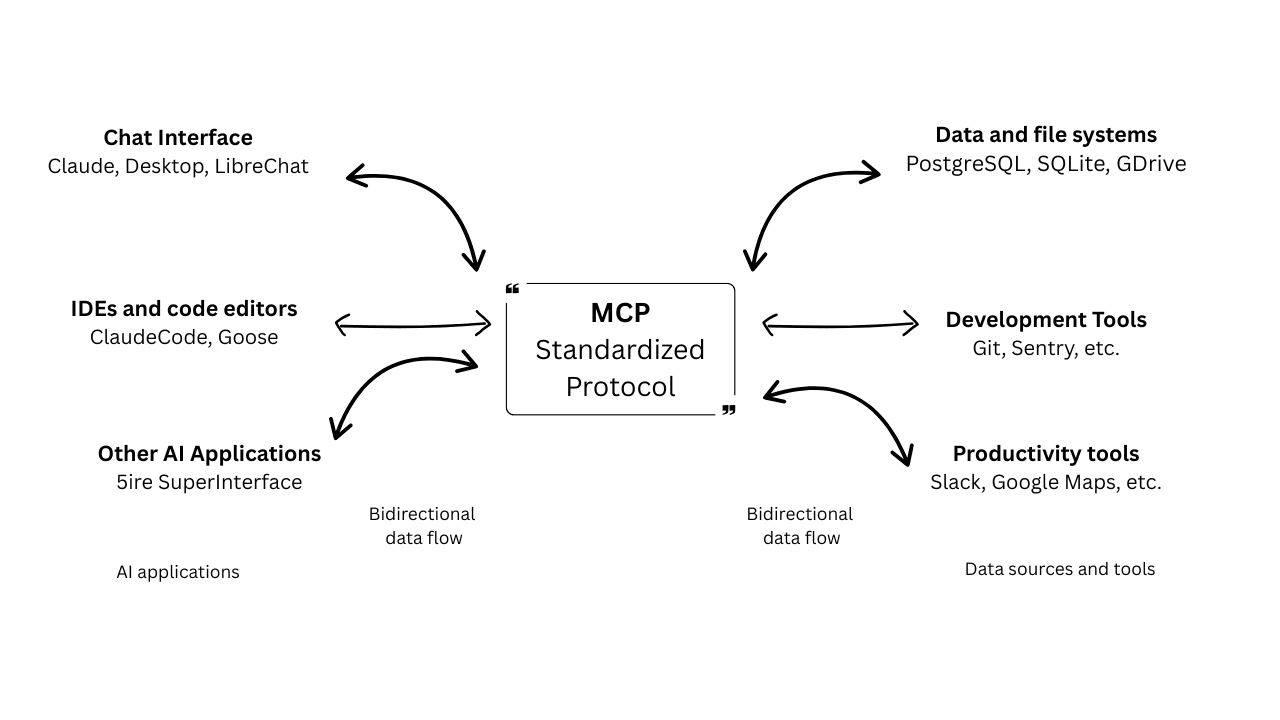
The user or orchestrator defines a high-level goal (e.g., “Generate a report from the latest code metrics”).
The MCP server receives the request, interprets it, and delegates subtasks.
Specialized agents perform their roles, one fetches data, another analyzes it, and a third writes the report.
The results are collected, verified, and sent back through the MCP layer.
This architecture transforms independent agents into a coordinated intelligence network.
Example MCP Servers and Ecosystem Integrations
MCP servers can connect to a wide range of tools and platforms. Below are a few examples of existing or conceptual MCP implementations:
Popular Integrations
Jira MCP Server: Enables agents to create, assign, and track issues programmatically using natural language.
ClickUp MCP Server: Allows automation of task creation, status updates, and time tracking.
Slack MCP Server: Bridges communication between agents and users through real-time collaboration.
GitHub MCP Server: Lets agents manage repositories, pull requests, and CI/CD pipelines.
Notion MCP Server: Provides read/write access to documents, notes, and project databases.
PostgreSQL MCP Adapter: Acts as a data layer, enabling agents to store or query structured data consistently.
Custom FileSystem MCP Server: Handles local file I/O for build automation, logs, and code management.
These examples demonstrate how MCP can unify business operations, development workflows, and research pipelines.
Example Integration with Claude CLI
You can integrate Claude CLI (from Anthropic) with an MCP server to create a seamless agent interface. Here’s a minimal example:
# Step 1: Add to claude
claude mcp add --transport sse atlassian https://mcp.atlassian.com/v1/sse
# Step 2: authenticate
claude> /mcp
# Step 3: Run a command through Claude (delegated via MCP)
claude> Analyse JIRA issue SCOR-5808
This setup allows Claude to act as the orchestrator while MCP handles communication with backend agents like Jira, ClickUp, or DevOps bots, enabling full workflow automation via simple natural language.
Real-World Applications
• DevOps Automation
A monitoring agent detects performance degradation and notifies the MCP server. The MCP then triggers a DevOps agent to scale resources or deploy a fix automatically.
• Research + Writing Pipeline
A research agent gathers data, a summarization agent synthesizes it, and a writing agent generates a coherent blog or report, all orchestrated through the MCP.
• Software Development
An MCP-coordinated environment allows code, test, and deployment agents to collaborate, drastically reducing turnaround times.
• Cybersecurity Operations
Security agents can scan systems, identify vulnerabilities, and trigger remediation tasks, while MCP ensures safe command execution and centralized monitoring.
Implementing an MCP Server for Your Agents
Building your own MCP server involves three primary layers:
Command Parser – Receives natural language or structured commands and maps them to executable actions.
Agent Registry – Maintains a list of connected agents, their capabilities, and current states.
Execution Engine – Handles task routing, parallel execution, and context management.
Recommended Tech Stack
Backend: Rust or Go for high performance; Node.js for flexibility.
Communication: WebSocket, gRPC, or REST.
Integration: Ollama, LangChain, or OpenAI’s Agents API.
Example Use Case:
When a user says, “Deploy the latest version,” the MCP identifies the command, delegates to the DevOps agent, and returns deployment status through the orchestrator.
The Future of Agent Integration
MCP servers represent the next logical step in the evolution of AI infrastructure. As ecosystems mature, we’ll see the rise of Agent Operating Systems, environments where autonomous agents can dynamically collaborate across contexts.
With standard protocols like MCP, interoperability becomes the default. Instead of building siloed AI assistants, developers can create modular, composable agents that work as part of a greater whole.
Eventually, these systems will give rise to meta-agents, supervisors that can orchestrate entire fleets of agents to achieve complex, multi-domain goals.
Conclusion
MCP servers are not just another integration layer; they are the foundation for collective intelligence. By unifying diverse agents under a shared protocol, they transform fragmented intelligence into coherent, goal-driven collaboration.
The future of AI won’t be about a single model dominating the field. It will be about many agents working together, each specializing in their domain, harmonized by a common intelligence infrastructure.
The true power of AI lies not in isolation, but in orchestration, and MCP servers are the conductors of that symphony.
Have a project concept in mind? Let's collaborate and bring your vision to life!
Connect with us & let’s start the journey
Share this article

Anuragh K P
Team Lead





Get in touch
Kickstart your project
with a free discovery session
Describe your idea, we explore, advise, and provide a detailed plan.